Redcliffe is a housing estate in the south-east of Bristol’s city centre. The area is dominated largely by housing blocks of distinct design. The following is a piece written by Ray Newman about the design of Redcliffe and accompanied by photos I took during my visit. It was published in BRUTAL Bristol.
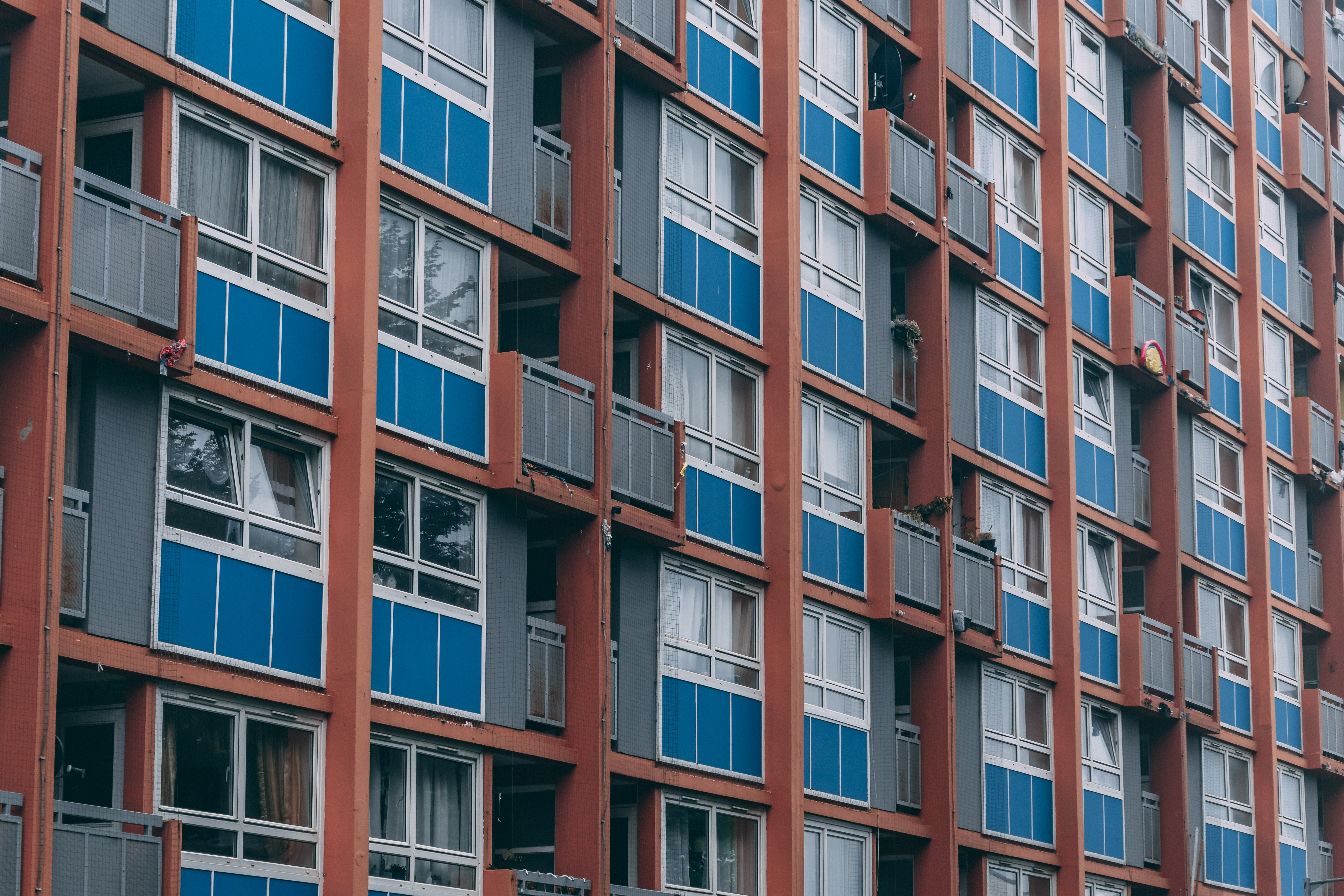
Redcliffe by Ray Newman
In September 1947, Walter Gropius and Le Corbusier came to Britain. They were part of the Congres Internationaux d’Architecture Moderne (CIAM) which met in Bridgwater, Somerset, with excursions to a prefab housing factory in Weston-super-Mare, to Montacute House at Yeovil and, of course, to Bristol. The centrepiece of the congress was a day-long lecture by Gropius and Le Corbusier on the subject of town planning. Bristol’s architects must have taken note because within a few years the Blitz-blanked city had its own gleaming Corbusierscape on the north bank of the River Avon at Redcliffe.

The estate at Redcliffe is unusual in its completeness and clarity of vision, covering most of a block surrounding Redcliff Hill. Slab housing blocks are arranged on the slope, grouped by date and design, which gives a sense of variety while also providing the regularity and repetition modernist voyeurs find so pleasing.
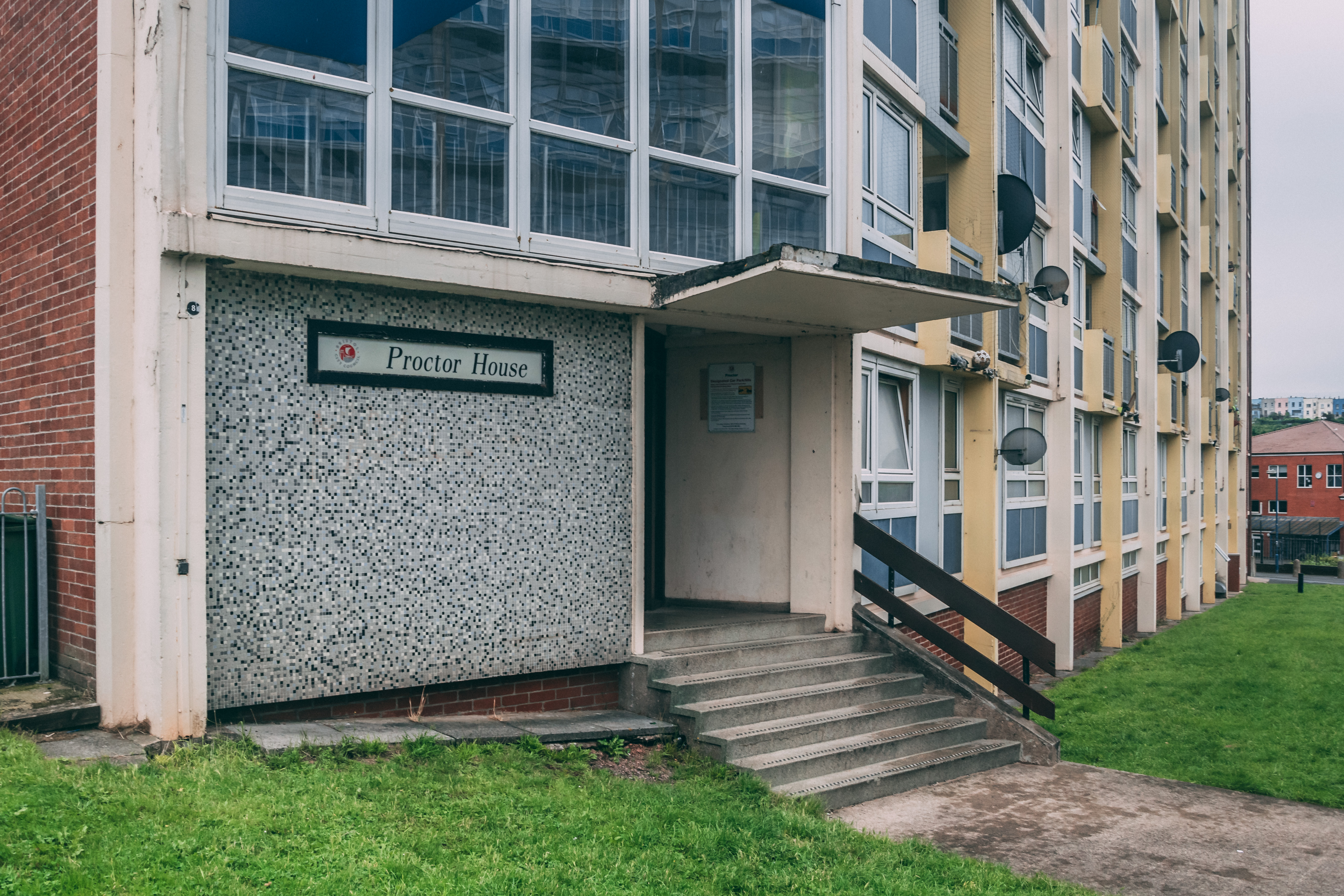
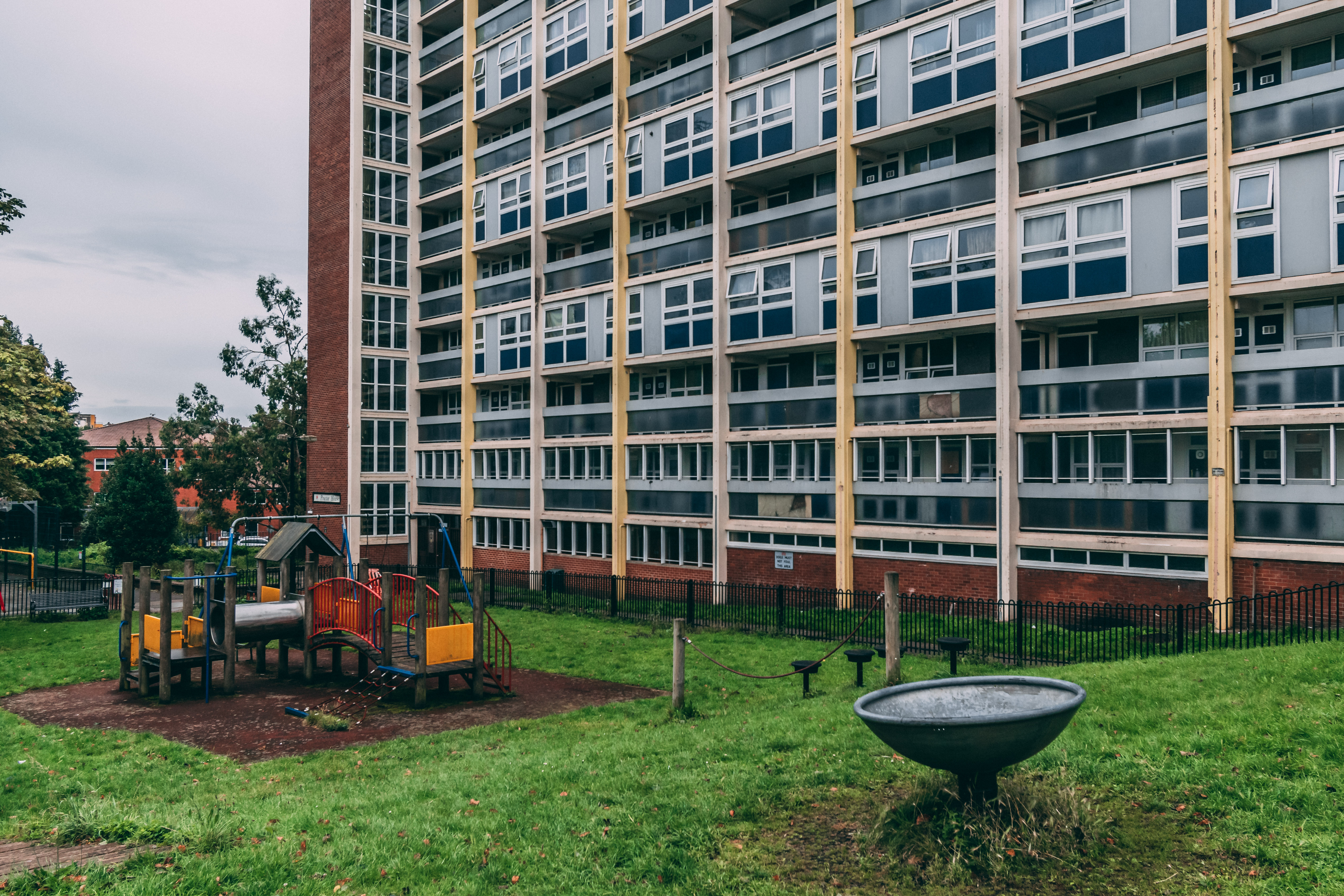
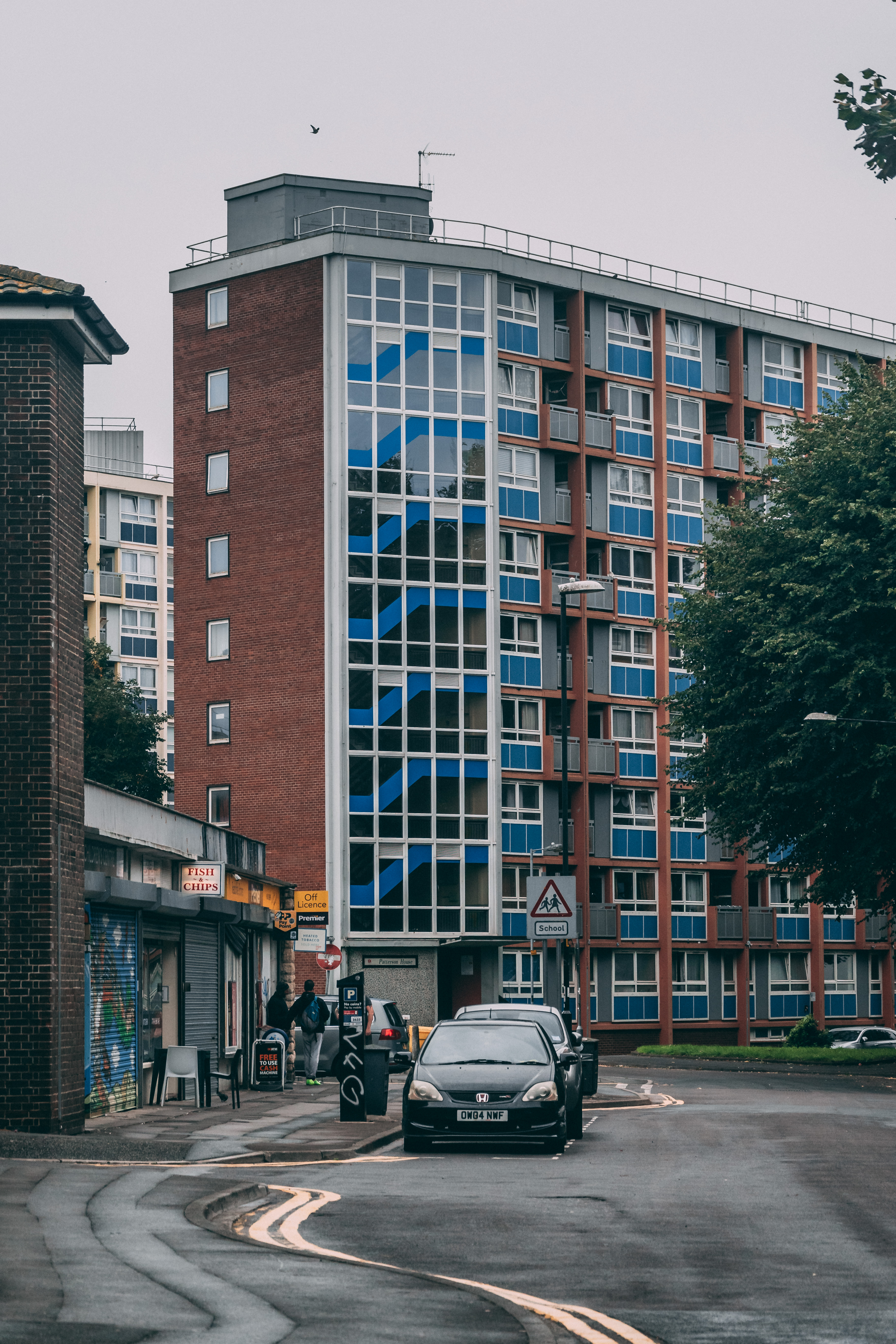
The first phase of development, from 1954, gave us Aston House and Chatterton House — low, built around a garden, full of light and fresh air. More Festival of Britain than continental moderne. But as more blocks were built, they got bigger and more slab-like, resembling Corbusier’s Unite d’Habitation model in their broad outline. Patterson House and Proctor House, both 1963 and designed by city architect Albert Clarke, are perfect twins, with Spencer House (also Clarke, 1959) a near match. Another pair of twins, the stocky Yeamans and Broughton houses (sadly badly clad) were built in the mid-1960s.
Across the dual carriageway of Redcliff Hill, or beneath it if you’ve a taste for the thrill of an unknown underpass, is the biggest of them all: the three-sided complex of Francombe, Waring and Underdown houses, from 1960. At the river’s edge, down the hill, Francombe House has twelve stories, presenting a wall of glass and balconies that seems almost un-English in its confidence. The waving concrete canopy and the black and gold geometric tiles on the wall make the entrance to the inner courtyard feel like an event – notice that you are crossing a real threshold into a real space. It’s a disappointment inside, of course – only bins, cars and building works where there should be a square and perhaps even a pub.

View the scheme from the opposite bank of the river and you’ll gain a new perspective. First, you’ll see the estate as a whole filling the horizon, a monument to the age of the big idea. Then you’ll notice one specific, marvellous detail: beneath the quayside, rising from the mud-clogged river, there is a series of 19th century structural arches; and those arches are echoed in the facade of Francombe House, from entrance canopy to crowning storey.

The other great vantage point is right at the heart of it all, on the junction of Prewett Street and Somerset Square. There, Patterson and Proctor shoot out into the sky in all their angular grandeur; the space-age box of Alec French’s Methodist Church offers breathing space; and beyond, mature trees grow between block after block. Proof, perhaps, that if the urge to demolish can be resisted, the post-war estate can find its peace.
Further reading:
Thanks to Ray Newman for providing the words to accompany my photos. You can follow him on Instagram.
Redcliffe featured in BRUTAL Bristol, a collaborative zine created to showcase the unique architecture of Bristol from the perspective of photographers, writers, creatives and enthusiasts. Money raised from the sale of the zine has helped FareShare SouthWest provide over a thousand meals for families in need!

 Our Shadows Will Remain
I appreciate the thought-provoking exploration of Redcliffe and its significance as a monument to the age of the big idea on the website you shared. The depth of insight and historical perspective provided in the post is truly enlightening. Thank you for shedding light on this intriguing subject matter.
LikeLike