Helsinki Metro

Over the years that I have lived in Helsinki I have become to rely on the metro to move around the city, as many others do too. It has also been a place for me to explore my photography. Though Helsinki metro doesn’t have the wow factor that other systems may have (I am thinking of you Stockholm), or the extensive reach of others, it still has its charm.

Helsinki Metro
Hakaniemi Metro Station

Helsinki Metro has been a continuous project, opening for operation in 1982 after almost 30 years being planned. The small rail system has gone through many changes with new stations being added up until 2007 and with huge expansions currently under development, Lansimetro.

Helsinki Metro carries 63 million passengers a year, a relative small number when you consider the London Underground carries 1.34 billion a year and that is only the 11th most busiest metro system in the world!

Quick Facts

Helsinki Metro is the Northern most metro system in the world.

63 million passengers a year.

Currently 11 stations, 6 of which are underground.

Plans to extend the metro to the west are under way.

Several of the Helsinki Metro Stations contain a number of art works and installations.

Helsinki Metro
University of Helsinki Metro Station
Ruoholahti

Currently Ruoholahti is the last station, or first depending on your point of view, on the current metro line. From here the plans are to extend the metro to the west, connecting Helsinki with the neighbouring city of Espoo.Helsinki Metro

Ruoholahti contains an installation by artist Juhana Blomstedt, one of the many stations in Helsinki that does have some form of artwork. The station is decorated in blue and white tiles, reflecting Ruoholahti’s maritime location.

Kamppi

Helsinki Metro

Kamppi is the station I use the most. Placed in the rock above the platform are signs pointing in ever direction, each sign has a city from around the world engraved on it.

In between the two platforms is a small space organised by HAM that hosts different art exhibits, changing a number of times a year. At the time of writing the space contains artwork by the street artist Jussi TwoSeven, before that it was the Japanese artist Yayoi Kusama.

See ROAR27 by Jussi TwoSeven in my latest post Art in the Metro.

Helsinki Metro

University of Helsinki

Helsinki Metro

Formerly known as Kaisaniemi, for the park which is located a few hundred meters from the stations entrance, but the name was changed in 2014 to University of Helsinki for the campus that it serves.

University of Helsinki station is one of the most colourful out of all of the stations and that is because of the art installation that starts at the top of the escalators and continues down onto the platfrom. The lighting installation was created by Annikki Luukela and is named Network.

Helsinki Metro

Kalasatama

The first station above ground when heading east from the from city and the last to be completed in 2007. Currently, the area surrounding the station is under heavy development but still one of the most interesting with Suvilahti and Teurastamo on its doorstep.

The station was built around the existing track with little disruption to metro traffic, which is also the reason why there are two platforms, one for each direction of travel, rather than a central platform that serves both directions.

The platform was at one time full of vibrant street art completed by locals and reflected the community that the station serves but upon a recent visit I found to my surprise that it was all gone!

But here is a reminder of its inspiration.
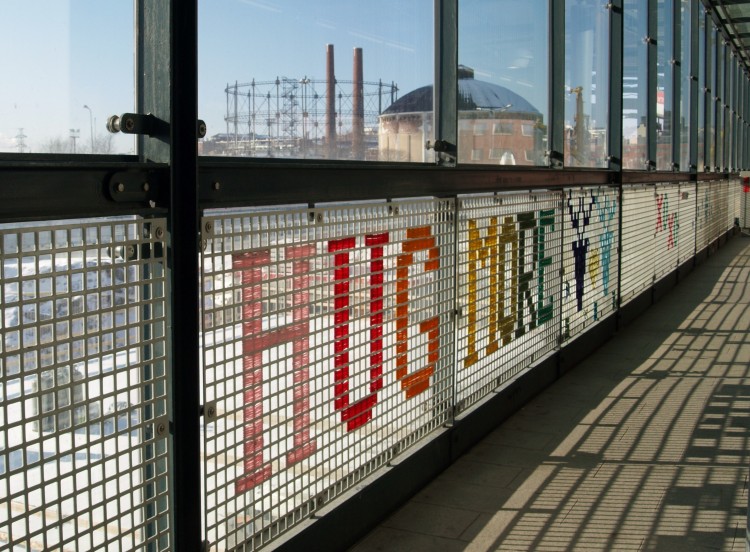
Helsinki Metro
Kalasatama Metro Station from early 2016
Itäkeskus

There is only one mistake, a part from heading in the wrong direction, that can be made when using the Helsinki Metro and that can happen here at Itäkeskus where the metro splits, one to Mellumäki, the other to Vuorasaari.

Helsinki Metro

Mellumäki

Mellumäki is 17km from Ruoholahti station, the full length of the current metro line, and the northern most metro station in the world. After Helsinki the next contender would be St Petersburg and its most northern station Parnas.

Länsimetro

Länsimetro or west metro will continue underground from the already existing Ruoholahti station and stretch for a further 13.5 km to the west of Helsinki. The extension was planned to open in August 2016 but has been delayed for an undetermined amount of time. In recent news it has been thought to open later this year but most likely not until March of next year.

Plans to extent the metro line have been underway since 1997 (though plans made in the 1950s contained stations in Espoo) when the city of Helsinki proposed the idea to the city of Espoo. The plans were continuously rejected until terms were agreed.

The new line will at first include eight more stations with a further five once phase one is complete. These new metro stations will connect the residents of Espoo to Helsinki, along with the current bus and train lines.

Helsinki Metro
Kalasatama Metro Station

Have you enjoyed this? Then I would like to hear from you. What is your favourite metro system in the world? Have you any great pictures from beautifully decorated metro stations? I would like to see them. Also, I am a huge fan of long exposures and moving trains, let me see them in the comments below.

Further Reading:

More information on the art works that feature in many of the stations can be found on HAM Helsinki’s Sculpture Database.

If you like photographs of metro stations, so does Somewhere in Helsinki. His Instagram also includes the beautiful metro stations of Stockholm.

Many of these photos have been added to my own Instagram account.

Helsinki Feeling

Over the last year I have been exploring Helsinki from a different perspective, I never used to care about unique staircases, interesting doorways, or if a building had a hidden courtyard. But it is in these things, among others, that I have become fond of.

I have met others with similar interests, surprisingly there are a few of us, and we have begun to explore the city and help each other develop. It has opened my eyes to a new side of photography and I now approach everyday objects with a different eye.
Helsinki Feeling
A friend of mine also explores Helsinki looking for these details, with one of his projects focusing on the many different building facades that Helsinki has. He was recently featured by Guardian Cities and they wrote an article about his project, Helsinki Facades.
I hope I am able to continue and that there will be a few more great staircases, among others, gracing these pages.
I would like to hear what you all think about this type of photography, is it something you are interested in or do you photograph these types of details?

Network

Sculptures of Helsinki
Sculpture of Helsinki #20

Network is an installation that begins on the upper level of the University of Helsinki metro station (formerly Kaisaniemi) from Annikki Luukela. It is different coloured lights that continue from a glass wall filled with lights down the escalators to the metro level, much like the tiled installation at Ruoholahti metro station.

Sculptures of Helsinki

The green strips of light that lead down the escalators give the station an almost futuristic feel, as well as those that decorate the wall. Every time I visit this station I wonder how many people pass by each day without thinking about or even notice these details of their surroundings. It is these small details of the city, and its metro system, that make it unique.

Do you know any great details of your city that you have noticed but think others may have missed?
Sculptures of Helsinki

You can find almost 500 outdoor sculptures, pieces of environmental art and historical monuments in Helsinki and they are accessible to everyone. See more and search through the database at HAMhelsinki.fi.

Fiskars Village

Back in December I wrote a post about my visit to the historical Porkkala with the Global Degree team and I have finally got around to posting this story from the afternoon.

Fiskars Village is around 80km west from Helsinki. The village grew around the production of iron and copper which was found in 1649 by Petter Thorwöste. In the 1800’s the industry grew fast as they began to produce scissors, knives and ploughs.

Fiskars has grown into an international company and well known brand. It is best known for its orange handled scissors, created in 1967, the first pair of plastic handled scissors which are found in almost every home.

As production moved elsewhere there was no need for the factories and the buildings became empty. The idea came about of renting the buildings cheaply to artists, saving them from being abandoned and eventually becoming derelict. This move saved the town and a creative and unique community has grown.

dsc_0060-2

It was December, a pretty miserable day with on/off rain and low heavy cloud. We were given a guided tour of the village and walked along the river until we reached a stretch of cafes, shops and art galleries.

dsc_0065 dsc_0079

dsc_0099 Fiskars Village is home to many artists or artisans. One of the motto’s you here regularly when visiting the village is ‘live or work in Fiskars’, meaning that most of everything you see is produced there by people who live or work there.
dsc_0141

dsc_0137

Next, we were off into the woods to enjoy the Finnish nature and for some a little taste of downhill mountain biking with Canyon fat bikes.

dsc_0212

dsc_0200

dsc_0219 The clouds dispersed as filming began and a couple of runs back and forth were made to make sure there was enough footage, and to have as much fun as possible. It was a generally wet morning and that had effected the ground conditions, some places waterlogged, others covered in thick ice.

dsc_0182dsc_0326

Above Marco from the Fiskars Village Trail Center leads the way through one of the more difficult corners of the course on his way back into the village.

dsc_0268

Further Reading:

This post is a continuation from A visit to Porkkala and 1950’s Era Russia.

Check out Global Degree and their YouTube channel where they aim to travel every country in the world, their episode from Finland will be shared later this year.

This visit was in co-operation with Day With A Local and SE-Action who organised the days events.

Boredom Births Creativity

What do you get when you take a bored Finnish man struggling to survive winter and give him a chainsaw?

An Ice Carousel

What is that I hear you call, well let me tell you.

First you need a frozen lake, many places don’t have those but Finland has them in abundance this time of year. Then, take a chainsaw and a length of wood long enough to mark out your circumference. Work your way around cutting through the ice until there is a small gap that will allow the circle to rotate.

Keep hold of that chainsaw, you’ll need it again. On the outside of the large circle you have created cut a small hole, slightly away from the edge, and remove the ice. Here you will insert a boat motor.

Next. Gather all your friends and stand over the edge of your newly formed carousel. With one foot push off from the surface of the lake until your carousel begins to turn, turn on the boat motor to assist you and keep the carousel moving continuously.

Voila, now you have your very own ice carousel. Invite your friends over and have a sauna, which of course you set up in the middle of your carousel.


Boredom Births Creativity

Over this winter many Ice Carousels have been set up throughout Finland. This one I visited was actually two carousels created on töölönlahti in the center of Helsinki to celebrate Finland’s 100th year of independence. From the sky it read the number 100 with the carousels representing the 0’s and solar panels used to power the sauna and the motor lined up as the 1.

Boredom Births Creativity

Check out the video below and see the Ice Carousel turn through its Helsinki surroundings.

Sunsets and Silhouettes

Sunsets and Silhouettes
Helsinki, Finland

A Good Match

Olhava, Repovesi National Park

Olhava, Repovesi National Park
Autumn

I have now hiked in Repovesi National Park in autumn and winter with both trips being equally interesting in their different ways. One of the places I visited during both trips was Olhava, a huge rock cliff that is a popular spot for climbing, but also a great place for photographs.

During the autumn I was restricted to the lakeside but in the winter with the lake frozen I was able to move freely and take photos from any angle, I was also able to walk right up to and along the cliff.

What’s your favourite view?

Olhava, Repovesi National Park
Winter

In response to the photo challenge A Good Match

Further reading:

Don’t forget to read about my latest visit to Repovesi National Park in Winter, as well as my other posts from my nature trips in Finland:

Repovesi National Park in Autumn

Three Nations Border Point

5 Things to do in Finnish Lapland in Summer

Repovesi National Park in Winter

Among my many aims during the winter months was to spend a night camping. I had been camping many times but in the U.K temperatures generally stay above zero and the chances of snow is almost none. To winter camp in Finland would be an interesting experience and, more importantly, a test of what I could endure.

With a few friends we drove out to Repovesi National Park with the aim to spend a night in the Finnish nature. Luckily, the temperature was a pleasant -8°c., not too cold but cold enough.

Repovesi National Park in Winter

Repovesi National Park in Winter

While walking it was easy to stay warm, normally stripping back to only the necessary layers but once we stopped it became important to put those layers back on.  My difficulty has always been my toes, no matter what I do when I stop they are the first body part to get cold and the hardest to keep warm.

Repovesi National Park in Winter

Hiking during winter had one great difference, there were short cuts everywhere, when ever we needed we could just cut across the frozen lakes rather than keeping to the trails, making the national park very accessible. There wasn’t much snow cover so walking without the assistance of snow shoes was comfortable.

Repovesi National Park in Winter

Our aim for the day was the rock formation Olhava and we arrived a little before sunset, though there would be little chance of seeing one. The clouds broke for a moment when we arrived but more rolled in as we made the climb to the top.

Repovesi National Park in Winter

After spending some time on Olhava, we decided to camp in the area and use the fireplace by the lake to cook our dinner and supply some much needed warmth.

Repovesi National Park in Winter

After dinner we headed back to Olhava across the frozen lake to take a few night time shots, using our headlamps to create different light effects on the iconic cliff face.

Sleeping was the time I was dreading the most, it was easy to stay warm while walking but during the night that might become more difficult, especially if the temperatures dropped. I layered up, almost wearing more clothes now than I had been wearing during the day. I was determined to sleep well.

Repovesi National Park in Winter

The next morning we broke camp and hit the trail without breakfast, aiming to be back at the car park before lunch and indulge in a pizza on the drive back to Helsinki. It wasn’t as cold as yesterday but by the time all our gear was away we needed to start moving to warm up again.

Compared to the others I had similar experience but I didn’t have the gear. I had to pack more to make sure I was prepared, extra clothes. two spring sleeping bags combined with a liner,  and two sleeping mats. Everything was used to ensure I ‘survived’ the night.
Repovesi National Park in Winter

A short route was planned with some backtracking involved. We wanted to take in the view from the viewing tower, a place I had also visited during the Autumn. Repovesi National Park is full of excellent viewing spots and we had managed to visited a few of the best during this short trip.

After the viewing tower we cut our way back across lakes to find the shortest and most enjoyable route, making any detours that we desired until we found out way back to Lapinsalmi Bridge. This time we crossed the lake underneath it rather than crossing it as we had done the day before.

Repovesi National Park in Winter

If you have enjoyed this then my other experiences in the Finnish nature may be of interest to you.

Further Reading:

Repovesi National Park in Autumn

Three Nations Border Point

5 Things to do in Finnish Lapland in Summer

Pleasure in the Pathless Woods

Pleasure in the Pathless Woods


“There is a pleasure in the pathless woods,
There is a rapture on the lonely shore,
There is society, where none intrudes,
By the deep Sea, and music in its roar:
I love not Man the less, but Nature more,
From these our interviews, in which I steal
From all I may be, or have been before,
To mingle with the Universe, and feel
What I can ne’er express, yet cannot all conceal.”

Do you know the quote? If you have any quotes about nature I would like to hear them.

Christiania – The Troubles of a Freetown

When heading to Copenhagen I had little interest in visiting Christiania but I had heard from friends that it would be worth it, after all it is Copenhagen’s second most visited place in the city.

Christiania began Forty-five years ago when the military moved out of what had been a long standing military base and squatters moved in. The community grew and grew with the government finally legalising the squat in 1983. In 2011 Christiania’s future was threaten so the residents set up a foundation to buy the land from the government, many people were happy to donate and 12.5 million kroner was raised.

Christiania - The Troubles of a Freetown
Photos are prohibited within Chritstiania and I was happy to follow the request. After a few snaps at the entrance my camera went into my bag and in we went.

Because of the drug trade the area had lost some of its charm in my opinion, it could have also been the time of year. Visiting in the summer I am sure the atmosphere would be different, there were plenty of areas for people to gather in the sun and the natural surroundings would be picturesque. But on this gloomy winter’s day it wasn’t the most welcoming,  especially when we stumbled across the ominously named ‘Pusher Street’.

I hadn’t read much about the area before my arrival and I had no idea about the change that Pusher Street had recently gone through. Huts that had once lined the roads had recently been torn down in an effort to reduce the drug trade that had been dominating Christiania. It is estimated that 1 billion kroner changes hands on Pusher Street with many people looking to grab a piece, leading to other problems. The most recent being a shooting in August 2016 where a policeman was shot and two others injured.

Christiania - The Troubles of a Freetown
Flag of Christiania

Now, the huts had been replaced with groups of guys standing around, some huddled around burning trash cans. I never felt unsafe or threaten as I walked through but it was far from a comfortable situation. The residents have never wanted Christiania to be only about the use of cannabis and since these incidences they have decided to move away from it, encouraging people to buy elsewhere.

Once through the group of buildings we walked along the embankments that ran next to the water. Christiania was at one time an operational military base for hundreds of years and has a number of sites under national heritage protection.

Christiania - The Troubles of a Freetown
Christiania within the city of Copenhagen

Houses continued all the way back to the waterside, some were old buildings that had been re-purposed, others were more make-shift, made from recycled materials crudely knocked together. It would have been nice to walk along the water, and even to the other side, but my trip was restricted by time, so we walked back to the road in search of Danish pastries.

Even now I still don’t know exactly why the people of Christiania are allowed to in habit such a large area of Copenhagen, and with the growing need for development how much longer it will exist, but I think it is great in this modern world that there is a place where people can build their own society and community with values of their own.  And that is something to see and experience.

Christiania - The Troubles of a Freetown

Further Reading: 

Paradise lost: does Copenhagen’s Christiania commune still have a future? was helpful read when learning about the community and the problems it had faced.

Read more about the Darker Side of Tourism which Christiania would be a contender.